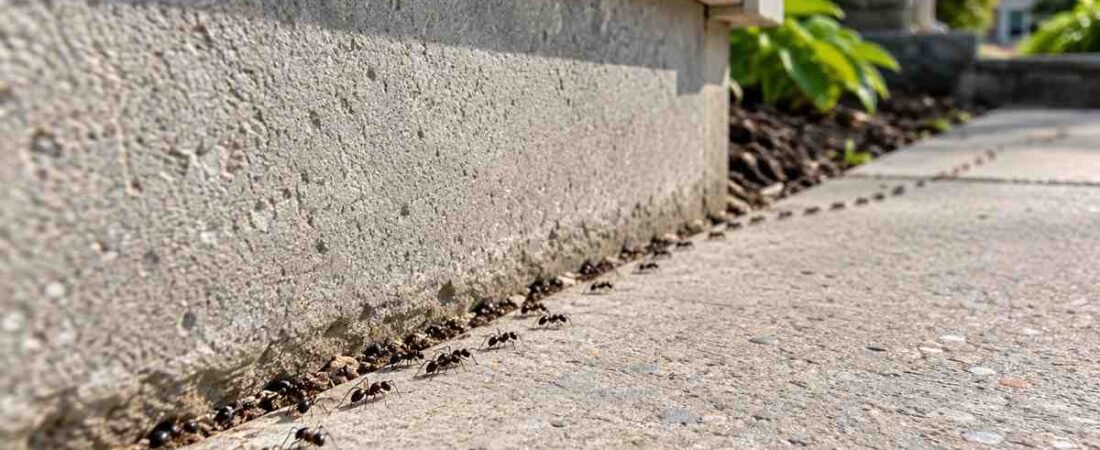
A line of ants beside the driveway may be harmless outdoor foraging. A steady stream entering a window frame, however, deserves a closer look. The useful question is not simply how to kill the insects you can see. It is where they are travelling, what is attracting them and whether a nest is outside or inside the building.
Barrie homeowners can make that investigation easier before purchasing a spray. A few careful observations often reveal whether the problem involves food, moisture, a gap in the foundation or potentially wood-damaging carpenter ants.
Follow the Route Before Disturbing It
Watch the ants for several minutes rather than immediately wiping away the trail. Note whether they are travelling between mulch and a foundation crack, climbing a downspout, moving under siding or heading toward a door threshold. Follow the line in both directions when possible. A trail ending at spilled food is a different problem from one disappearing into damp trim.
Look at the same area at different times of day. Some ants forage more actively after dark. An occasional ant after rain is not proof of an indoor colony, but repeated traffic through the same opening is worth documenting. Take a photograph that shows both the insects and their route. A close-up helps with identification; a wider shot helps locate the entry point later.
Avoid tearing open siding or injecting household chemicals into a wall. Neither action establishes where the nest is, and careless treatment can make the investigation harder.
Check the Foundation and Nearby Landscaping
Walk around the part of the home where you noticed activity. Look at the joint between the driveway and foundation, gaps around hose bibs, deteriorated door sweeps and the base of window wells. Damp leaves and mulch piled high against siding can conceal routes. Move loose debris away and check whether soil or planting beds keep wood unusually wet.
If ants continue to enter, a pest control technician in Barrie can assess the insect species and find the route before recommending an extermination service. A useful assessment identifies a likely nest or travel path, not merely the place where you saw the greatest number of workers. The pest control technician should also distinguish outdoor foragers from evidence suggesting an indoor colony.
Do not seal an actively used opening until you understand where the insects are nesting. Sealing the wrong gap can redirect their movement without addressing the colony. Once the source has been managed, repair cracks with materials appropriate for the surface and keep vegetation from bridging onto the walls.
Tell Ordinary Foraging From Carpenter Ant Warning Signs
Large, dark ants are sometimes carpenter ants, but size and colour alone are not a reliable diagnosis. Check nearby wooden steps, porch posts and window trim for unusual dampness, soft wood or small piles of coarse, sawdust-like material. Carpenter ants excavate galleries in wood; they do not eat it. Finding a few workers outdoors does not necessarily mean the house is damaged.
Health Canada’s carpenter ant guidance explains why moisture-prone wood, satellite colonies and night-time activity matter. The distinction changes the response. Cleaning crumbs may interrupt foraging, but it will not repair wet framing or remove a nest inside a void.
If you find recurring indoor ants alongside wood debris, photograph the debris before cleaning it. Check whether a leaking gutter, loose flashing or poorly drained planter is feeding the moisture problem. Avoid drilling exploratory holes yourself near wiring or plumbing. That is a situation for a trained professional and, where required, a building repair specialist.
Reduce Food and Water Without Spreading the Colony
Start with the simplest attractants: pet bowls left out overnight, sticky recycling, food waste in an open garage bin and a hose connection that drips beside the wall. Wipe surfaces, store food securely and empty outdoor containers that catch water. Ants may keep following an established route for a while, so judge progress over several days rather than an hour.
If treatment is necessary, the choice matters. Applying a broad spray across visible workers may give an immediate result without reaching a hidden nest. Some species respond better to a properly selected bait strategy; carpenter ant colonies can require targeted nest work. A professional extermination service should explain why a particular control method fits the species and site.
Keep children and pets away from products and placements not intended for their access. Do not improvise a mixture of different pesticides, and never apply a product in a location its label does not allow. Physical repairs remain important even when a chemical treatment is appropriate.
Know What Successful Control Should Look Like
The goal is not a single afternoon without ants. You want traffic at the original entry point to decline, the reason for their attraction corrected and any damaged wood or drainage issues addressed. Mark the inspection date on your calendar, then look again after rainfall or a warm evening when activity was previously noticeable.
If ants reappear on a new route, share the old photographs with the technician. They may reveal whether the colony was missed, another nest is present or an exterior gap remains open. Ask what should be monitored and whether a follow-up visit is appropriate before approving repeat treatment.
For more detail on matching controls to ant behaviour, see Health Canada’s general ant-control advice. A thoughtful plan combines identification, source reduction and targeted treatment. That is more useful than repeated spraying around every baseboard whenever a few workers appear.